Leadership · Human Performance
One Thing the Best Leaders Do Differently
Why the best leadership development programs build on the one thing that fuels everything else
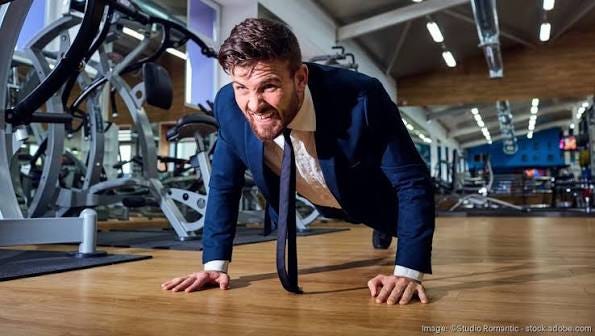
Most leadership development programs train skills from the neck up and leave out the body every other skill depends on. Physical intelligence for leaders means training posture, movement, energy, and presence as the foundation of leadership, not an add-on. The best leaders, and the best programs, start there.
During a recent 3.5-hour executive training on Building Energy and Resilience, which I taught for leaders at the Transportation Security Administration (TSA) through the University of Virginia's Darden Executive Education and Lifelong Learning Institute, one participant paused the room to share this:
"Okay, I need to say this. When I first saw this title, I wondered what it had to do with leadership development. Now I realize after being 1 hour into this course it has everything to do with leadership development… and with being the best version of ourselves as leaders. Thank you."
This made me smile inside and out. He got it.
That means his team, and everyone else in the room, will be impacted too.
What's Missing From Most Leadership Development Programs?
Look closely at what "well-being" means inside leadership development programs that spend 90 minutes or more on it, and you'll see it's almost entirely from the neck up. The focus is on resilience, emotional intelligence, or mindfulness. Those are all great skills, but there is more.
What about physical recovery, sleep, mobility, movement, posture, energy, and fueling your body for the best cognitive function?
Here are the stats to think about:
Physical performance isn't on the radar. When LEADx surveyed 145 companies and interviewed more than 50 CPOs and heads of leadership development for its 2024 Leadership Development Benchmark Report, the most in-demand skills were coaching, leading change, and feedback. Physical performance, the actual fuel a leader runs on, didn't make the list at all.
Leaders are running on empty. According to Deloitte, about half of workers regularly feel exhausted (52%) or stressed (49%), and managers and executives are just as likely, or more likely, to feel the same. And 75% of the C-suite say they're seriously considering quitting for a role that would better support their well-being.
Few organizations are getting it right. Deloitte's 2024 Global Human Capital Trends research found that only 10% of organizations say they're leading in "human sustainability," meaning leaving people better off than when they arrived. Among executives, just 12% say they're leading in this area, and 17% admit they haven't made any progress at all.
Why Physical Energy Is the Foundation of Leadership
This isn't a new idea. It's an ignored one. In 2007, Tony Schwartz and Catherine McCarthy published one of Harvard Business Review's most-cited leadership articles, "Manage Your Energy, Not Your Time."
Their argument: human performance doesn't come from managing hours. It comes from managing four interconnected energy reserves: physical, emotional, mental, and spiritual.
No amount of executive coaching or mindset work fixes a leader running on four hours of sleep and a body that hasn't moved since the last video call.
What Is Physical Intelligence for Leaders?
At MRx Leaders, we call this physical intelligence: the key human performance layer that's often left out. We believe every leadership development program and executive coaching engagement should be built on it as a foundation.
So instead of waiting for programs to come around, we created them.
We break physical intelligence into four trainable components:
1Posture
How you carry your body through hours of sitting, screens, and travel.
2Movement & fitness
How much, how often, and how well you move.
3Energy
The physical and emotional fuel you bring into every meeting and decision, deeply shaped by how you sleep and eat.
4Presence & focus
Your ability to be fully in the room, not just physically there.
None of these require an athlete's schedule. They require the same intentionality leaders already apply to strategy and communication, pointed, finally, at the one system every other leadership skill depends on: the body running it. (Need a place to start? Try these three small habits for busy leaders.)
Put simply, physical intelligence is what shows up in a leader's posture at 4 p.m., their energy walking into a hard conversation, and their ability to stay present instead of just physically present. That's not a soft-skills add-on. It's the pillar the rest of the program is built on.
Where MRx Leaders Comes In
MRx Leaders, formerly Movement Rx, was built to close that exact gap in leadership development: the human performance piece, with an emphasis on physical intelligence.
The truth is, physical intelligence and emotional intelligence were never separate tracks. Each shapes the other. We call that overlap human intelligence.
Most organizations still train only the emotional half. The ones leaning into our approach are training both, and the results show.
Frequently Asked Questions
What is physical intelligence for leaders?
Physical intelligence is a leader's ability to manage the body that every other leadership skill runs on. MRx Leaders breaks it into four trainable parts: posture, movement and fitness, energy (shaped by sleep and nutrition), and presence and focus.
How is physical intelligence different from emotional intelligence?
Emotional intelligence covers how you understand and manage emotions in yourself and others. Physical intelligence covers how your body's energy, sleep, movement and posture support you. They shape each other, and MRx Leaders calls the overlap human intelligence.
How do you add physical intelligence to a leadership development program?
Treat it as the foundation, not an add-on. Programs that work build in physical recovery, sleep, movement, posture and energy alongside resilience and emotional skills, and give leaders small habits they can practice during the workday.
Questions for You
How are you sleeping? How often are you moving?
Curious about how human performance fits into leadership development or executive coaching?
Let's Talk →Dr. T
Sources
- LEADx. The 2024 LEADx Leadership Development Benchmark Report. 2024.
- Deloitte. "As workforce well-being dips, leaders ask: What will it take to move the needle?" Deloitte Insights, 2023.
- Deloitte. 2024 Global Human Capital Trends: Human sustainability. 2024.
- Schwartz T, McCarthy C. "Manage Your Energy, Not Your Time." Harvard Business Review. October 2007.
Related reading: The One Thing High-Performing Veteran Leaders Keep Telling Me · 4 Non-Negotiables for Staying Healthy on the Road · The Veteran Gap