Team Performance · Resilience & Wellbeing
The Nervous System YOU Regulate Is the Culture You Create
Why teams don't mirror your words. They mirror your state.

Leaders shape culture through their own state, not just their words. Nervous system regulation for leaders means noticing when stress takes over and bringing yourself back to calm and focus, using tools like breath, movement and pauses. When leaders regulate themselves first, their teams feel safe enough to engage, speak up and perform.
A Story About a Leader Who Set the Wrong Tone
When I graduated from PT school with my doctorate, I took a job at a sports performance clinic. I was excited, energized by the work, the learning and the potential. That excitement didn't last long.
Within a few weeks, I felt the life slowly draining out of me. And I could trace it to one moment every day: when my boss walked into the room.
He never greeted the front desk staff. No hello. No acknowledgment. The only time he spoke was when something was "wrong," especially the way I was treating a patient. He didn't like that I added functional movement into protocols.
One day, I worked with a construction worker who came in for wrist pain. As I watched him move, it was obvious his back was taking a beating every day on the job. Treating the wrist mattered, but so did teaching him how to safely pick up heavy objects. So I grabbed a dusty barbell and showed him how to deadlift properly, right there in the clinic.
After the session, I was immediately reprimanded.
That moment made everything clear. My boss set the tone for the entire clinic. People didn't feel curious, creative or safe to think differently. Over time, everyone just showed up, did their job and left. The energy stayed low. The work became mechanical.
At the time, I didn't have the language for what was happening. I just knew I felt tense, small and shut down, and that I couldn't wait to create my own job and get out.
Looking back now, I understand it differently. Leadership doesn't just manage people. It regulates the nervous system of the entire organization. And that regulation determines whether people engage, expand and care, or simply survive the day.
That leads to an important point we teach in all of our leadership development trainings. (Learn more about these trainings.)
Why Do Teams Mirror a Leader's State?
Every team has a nervous system, and every person on that team feels the climate you bring every single day. Leadership isn't just about big decisions or quarterly results. It's the small things you do consistently: the way you start a meeting, respond to stress, or pause before reacting.
1Listening matters
When leaders truly listen, not to respond but to understand, they signal safety. People speak up, raise issues earlier and contribute more fully when they know their voice will be heard without consequence.
2Transparency matters
Sharing what you know, what you don't, and why decisions are made sets trust as the default.
3Tough conversations matter
Avoiding discomfort tells people that hard things should be ignored. Facing them with clarity and empathy sets the tone for accountability.
4Pauses matter
Taking a moment to breathe or gather your thoughts before responding shows that reflection is valued over reaction.
5Tone matters
The energy you bring into a meeting, whether rushed, stressed or grounded, spreads. Your team mirrors it, consciously or not.
Leaders must first regulate their own nervous system, and in doing so, they help regulate the nervous system of the team. Long before your strategy is heard, your internal state is felt.
You might be wondering what the nervous system actually is, and why it matters for leadership. Let's dive into the science.
What Is the Nervous System, and How Does It Affect Your Emotional and Physical Intelligence?
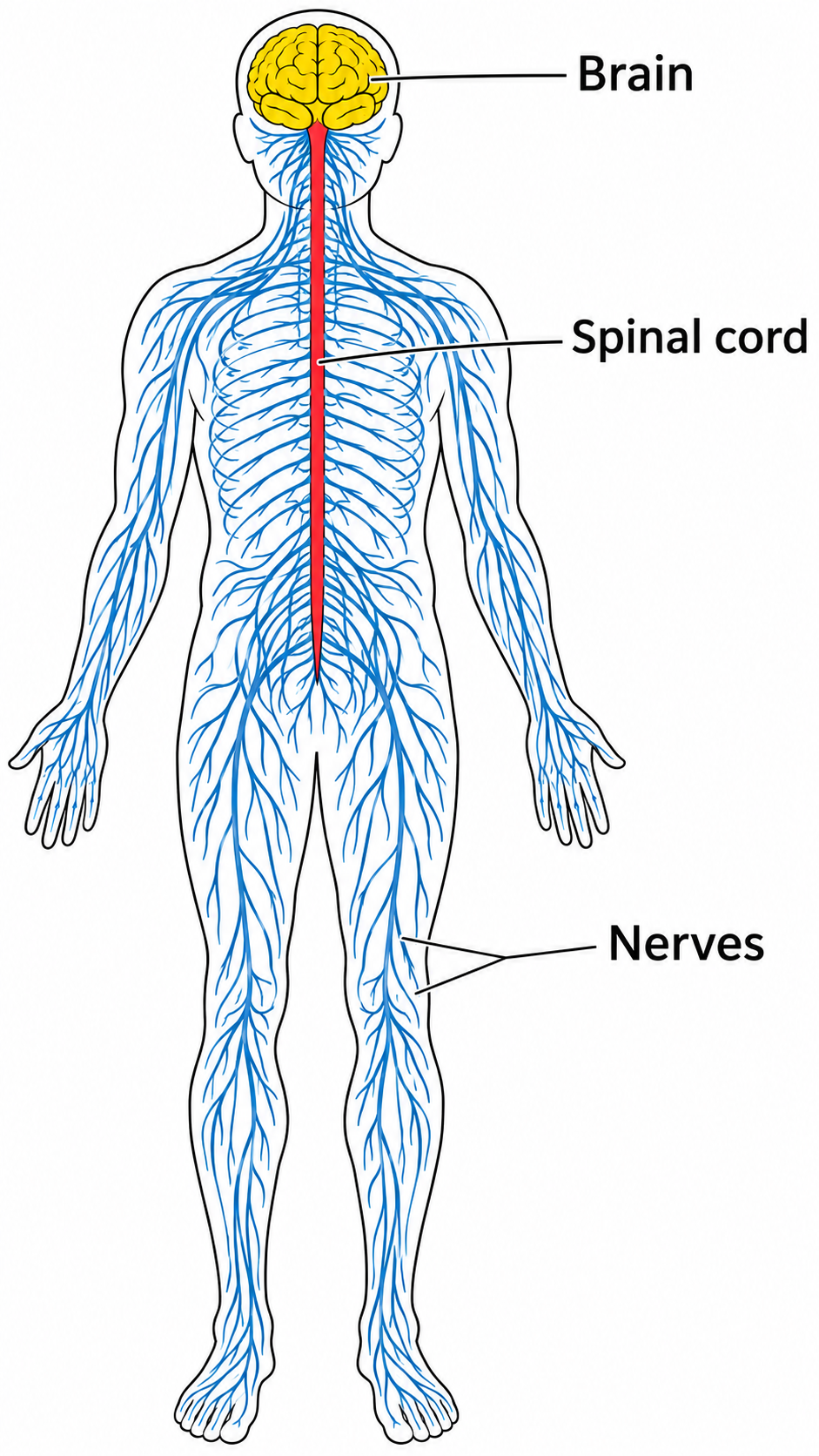
Literally speaking, the nervous system is your body's communication and control network. It links your brain, spinal cord and every nerve in your body to coordinate thought, movement, sensation and automatic functions. It's the hardware and wiring that makes everything your body and mind do possible.
Nervous system regulation is the ability to notice when your body shifts into a stress response and bring it back to a calm, focused state. It's the bridge between emotional intelligence and physical intelligence, and that's why it sits at the core of what we call Integrated Intelligence™, the new IQ.
Emotional intelligence (EQ)
The ability to recognize, understand and manage emotions, yours and others'.
Physical intelligence (PQ)
The ability to read and work with the body's signals: breath, posture, tension, fatigue, energy and stress responses.
Here's the truth about EQ and PQ: you can't access emotional intelligence without the body being on board.

When the nervous system is dysregulated, the body shifts into protection. Heart rate increases, breath shortens, muscles tense, and the brain prioritizes survival over reasoning. Research shows that even mild, uncontrollable stress can quickly impair the prefrontal cortex, the part of the brain responsible for planning and self-control, while strengthening the brain's more reactive emotional circuits.3 In that state, emotional awareness drops, empathy narrows, and self-control becomes unreliable, no matter how much someone "knows better."
Nervous system regulation is what allows:
- Emotional awareness to stay online under pressure
- Empathy to remain available during conflict
- Decision-making to stay clear when stakes are high
At the same time, regulation requires physical intelligence:
- Using breath, movement, posture and pacing to influence your internal state
- Reading the body's early warning signs before emotion spills into reaction
- Understanding how stress lives in the body, not just the mind
When emotional and physical intelligence work together, the nervous system becomes trainable rather than reactive. That integration has a name:
In leadership, Integrated Intelligence means:
- You feel stress without being hijacked by it
- You read the room because you can read yourself
- You regulate first, then communicate
- You create safety and performance through presence, not control
What Does the Research Show About Leaders and Their Teams?
A global survey of 3,400 employees by The Workforce Institute at UKG found that 69% of workers say their manager affects their mental health as much as their spouse or partner, and more than their doctor (51%) or therapist (41%).1
In a small pilot study at an Italian company of 229 employees, just 12 people (5% of the workforce) practiced meditation together every day for three months. Over that quarter, production quality rose 6.6% and productivity rose 10.5%, and colleagues who didn't meditate reported improvements in their own well-being.2 If a small group's regulation can ripple across a whole company, imagine what happens when that small group is its leaders.
These are just two examples from a large body of research on how the people around us, and especially our leaders, shape how we feel and perform. Your impact isn't defined only by what you do. It's in how and why you do it. When leaders regulate themselves, they create the conditions for others to feel safe, engaged and productive.
Self-Regulation Is a Performance Multiplier
Leadership begins with self-care and self-regulation. When leaders practice it, we see:
- Engagement, retention and creativity improve
- Psychological safety increases
- People feel cared for and respected, which isn't a nice-to-have but a performance multiplier
People don't leave companies so much as they leave bad bosses, toxic environments and unmanaged stress. Gallup found that one in two U.S. adults has left a job to get away from a manager at some point in their career.4 Leaders who regulate themselves create spaces where people can show up fully and do their best work.
How Can Leaders Regulate Their Nervous System? Try the Breath Wave
Breathing is like the remote control between your brain and body. It's largely automatic, yet completely trainable, and often the simplest place to start when you want to ground yourself during a busy day. (Here's how we build it into the workday: skills practiced at work actually stick.)
Here's a short video I made while I was pregnant with my second son. It teaches the Breath Wave, a technique you can use at work or in life to create calm in your body and mind, boost focus and energy, and even move more efficiently when you exercise.
Last Thing: Choose the Hard Path
Self-regulation isn't glamorous. It doesn't appear on a resume, and it's not easy under pressure. But the choice is clear:
React and repair
Often leads to exhaustion, turnover and tension.
Practice awareness and lead intentionally
Builds trust, resilience and meaningful results.
Leadership sets the nervous system tone, and that tone determines whether people operate from trust and regulation, or from tension and threat.
Frequently Asked Questions
What is nervous system regulation?
Nervous system regulation is the ability to notice when your body shifts into a stress response and bring it back to a calm, focused state, using tools like breathing, movement, posture and pacing. It keeps emotional awareness, empathy and clear thinking available under pressure.
Why does a leader's nervous system affect their team?
People pick up on a leader's state before they hear the leader's words. A rushed, reactive leader puts the team on guard, while a steady, grounded leader helps people feel safe enough to speak up, engage and do their best work. Research also shows managers have a large effect on employee mental health.
How can leaders regulate their nervous system at work?
Start with breathing, the fastest bridge between body and brain. Pause and take a slow breath before responding, notice early signs of tension in your body, and build short movement or breathing breaks into the workday, such as before a hard conversation or a big meeting.
What is Integrated Intelligence?
Integrated Intelligence is MRx Leaders' term for combining emotional intelligence (managing emotions, yours and others') with physical intelligence (reading and working with the body's signals). Nervous system regulation is the bridge between the two.
Set the Tone for Your Team
Our leadership development cohorts teach leaders to regulate first, then lead, with practical tools they use during the workday. Book a call with Dr. T to see what that could look like for your team.
Book a Call with Dr. T → Explore Our CohortsSources
- The Workforce Institute at UKG. "Managers Impact Our Mental Health More Than Doctors, Therapists, and Same as Spouses." January 2023. Report: Mental Health at Work: Managers and Money.
- Pagliaro G, Pelati R, Signorini D, Parenti G, Roversi F. "The Effects of Meditation on the Performance and Well-Being of a Company: A Pilot Study." EXPLORE. 2020;16(1):56-60.
- Arnsten AFT. "Stress Signalling Pathways That Impair Prefrontal Cortex Structure and Function." Nature Reviews Neuroscience. 2009;10(6):410-422.
- Gallup. "Employees Want a Lot More From Their Managers." Gallup Workplace, from the State of the American Manager report.
Related reading: The Leadership Edge Everyone's Ignoring · One Thing the Best Leaders Do Differently · What a Yale Professor Discovered About Leaders