Skills Practiced at Work Actually Stick
Stop asking people to change at home. Build behavior change into the workday, where it counts.
If behavior change depends on people doing more at home, it rarely happens. Cohort-based leadership training works because leaders practice four performance skills (breathing, movement, regulation and focus, and communication) during the workday, where the real pressure is.
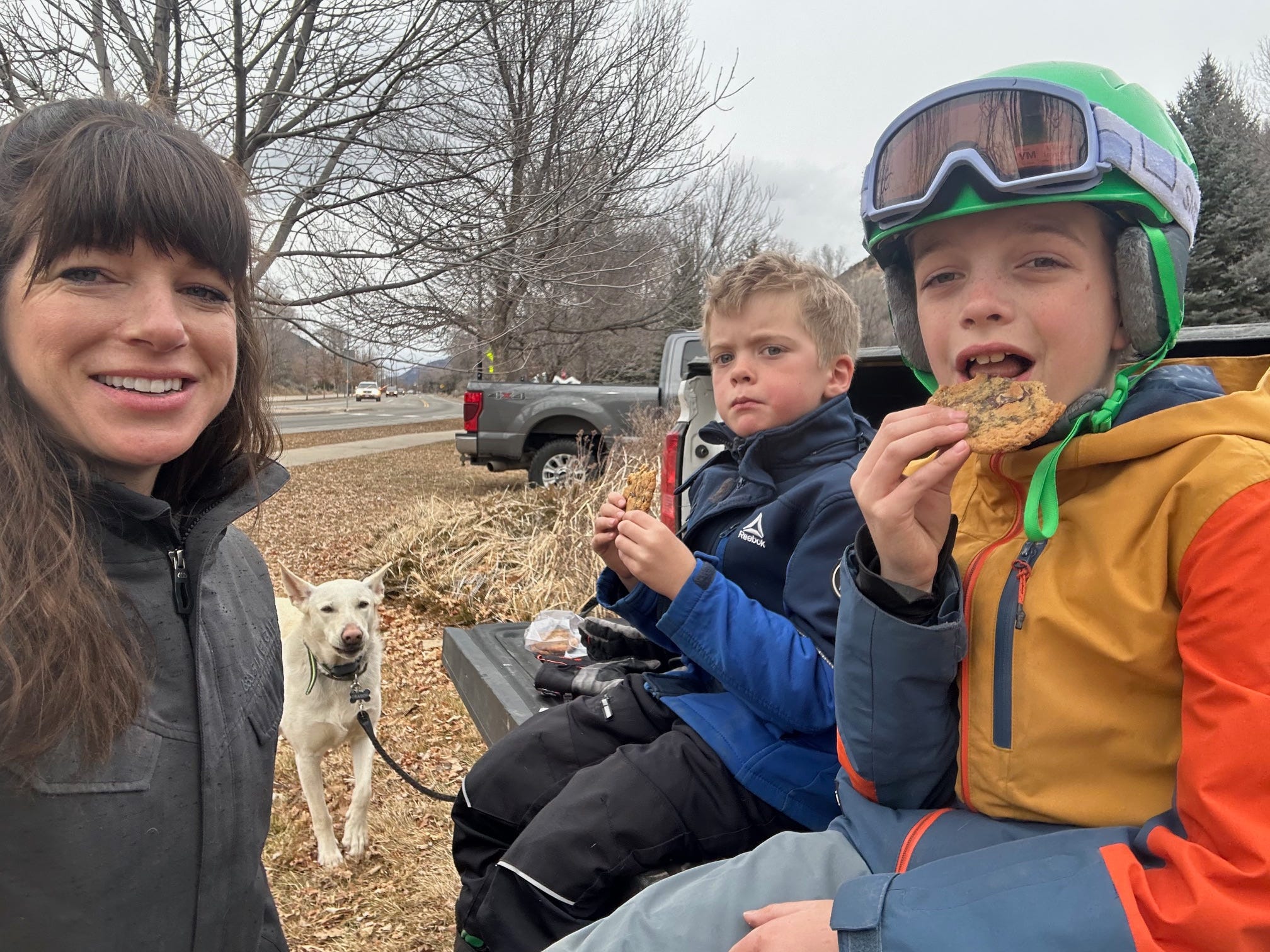
When I go home to my boys and my husband, I want to BE home. The skills I develop at work shape how I show up at home.
Here's the hard truth: if behavior change requires people to do more at home, it usually doesn't happen.
People are already juggling responsibilities, competing priorities and stress. The research on training backs this up: whether people actually use new skills depends heavily on what happens back at work, including support on the job and the chance to practice.1
Effective leadership development sticks when it's embedded inside the workday, where the real challenges and pressures happen. That's the foundation of every cohort-based leadership training program we build at MRx Leaders.
- Part 1The Leadership Edge Everyone's Ignoring: Integrated Intelligence™, the new IQ for leaders.
- Part 2What Works (and Doesn't) in Leadership Development
- Part 3Today: why skills practiced at work actually stick.
- Part 4Coming in the next newsletter.
What the Research Says About Learning at Work
A meta-analysis of more than 300 leadership training studies found that programs are most effective when they:2
- Include hands-on practice, not just information
- Spread sessions out over time instead of cramming them into one event
- Take place on-site, where people actually work
- Are delivered face to face
That's one reason cohort-based learning is often more effective than traditional one-off leadership training. (More on that in what works, and what doesn't, in leadership development.)
Proof: What We Saw at Cisco
In a five-month veteran leadership cohort we ran for Cisco, we gave the group five-day team challenges. Simple activity. Big insight.
"It is easy to knock the challenge out by myself, but being consistent is the challenge. Like any goal in life, break it down into daily or hourly efforts and it becomes doable. I also like how it gave my team a reason to connect."Chad Kalocinski, Cisco Program Participant
Results as of March 2026.
Not because we asked people to change at home. Because we built the cohort around where their real work, and real pressure, lived. (See more in how to improve veteran retention.)
The 4 Skills We Build During the Workday
These aren't soft skills. They're performance skills, and they're the core of our cohort-based leadership training model.
1–2Breathing & movement
Movement isn't just physical. It directly affects thinking, focus and emotional regulation. Brief, intentional movement and breathwork during the day lower stress, sharpen attention and improve decision-making. Deep diaphragmatic breathing, shoulder rotations, hip shifts: these aren't wellness perks. They're tools for performing under pressure. In a Stanford study, five minutes a day of exhale-focused breathing improved mood and lowered breathing rate more than the same time spent meditating.4 (Go deeper on physical intelligence for leaders.)
Motion is lotion.
3Regulation & focus
Staying present and calm under pressure is a leadership superpower. Neuroscience research shows that even mild stress can quickly impair the prefrontal cortex, the part of the brain that handles planning, focus and decisions.3 Leaders who can regulate themselves in those moments make clearer decisions, handle conflict better and create stability for their teams. You can't practice this in a classroom. It has to be trained in the moments when the stress is real.
Where your attention goes, your energy and life flow.
4Communication
Leadership is relational. Leaders who practice active, intentional communication in the flow of work build more trust, collaborate better and increase engagement. Paired exercises and in-the-moment practice build clarity, empathy and influence, not as theory but as lived habit.
Communication is one of the most powerful tools to get the outcomes you want in life.
The Bottom Line
When leaders and teams apply these tools in real time, under real pressure, behavior actually changes. Giving people space inside their workday to practice breathing, movement, regulation and communication turns skills into habits.
The result: stronger engagement, better retention, and tangible results for the individual and the organization.
Watch: Video 3 of 4
Missed the first two? Catch up on Video 1 and Video 2.
Frequently Asked Questions
What is cohort-based leadership training?
Cohort-based leadership training brings the same group of leaders together over weeks or months and builds practice into the workday. Leaders learn a skill, use it during real work and pressure, and hold each other accountable, so it becomes a habit instead of a one-time lesson.
Why do leadership skills stick better when they're practiced at work?
People are already stretched at home. When a new habit depends on extra time after work, it rarely happens. Skills practiced during the workday, in the moments when stress and decisions are real, get used and repeated, which is how behavior actually changes.
What skills does MRx Leaders build during the workday?
Four performance skills: breathing, movement, regulation and focus, and communication. Leaders practice them in short, intentional moments during the day, such as diaphragmatic breathing before a hard conversation or paired communication exercises with their team.
See How This Works Inside Your Organization
Our leadership development cohorts build the skills your leaders need into the workday, where the pressure is real and change actually happens. Schedule a conversation with Dr. T to explore what a cohort-based leadership training program could look like for your team.
Book a Call with Dr. T → Explore Our CohortsSources
- Blume BD, Ford JK, Baldwin TT, Huang JL. "Transfer of Training: A Meta-Analytic Review." Journal of Management. 2010;36(4):1065-1105.
- Lacerenza CN, Reyes DL, Marlow SL, Joseph DL, Salas E. "Leadership Training Design, Delivery, and Implementation: A Meta-Analysis." Journal of Applied Psychology. 2017;102(12):1686-1718.
- Arnsten AFT. "Stress Signalling Pathways That Impair Prefrontal Cortex Structure and Function." Nature Reviews Neuroscience. 2009;10(6):410-422.
- Balban MY, Neri E, Kogon MM, et al. "Brief Structured Respiration Practices Enhance Mood and Reduce Physiological Arousal." Cell Reports Medicine. 2023;4(1):100895.
Related reading: What Works (and Doesn't) in Leadership Development · The Leadership Edge Everyone's Ignoring · Ever Been Physically Home, Yet Not Mentally Home?